Information about our AI financial data harmonization work at Neravilo
We built this information page for teams who keep bumping into the same questions about AI financial data harmonization: what it can reasonably do, how it fits into existing research pipelines, and where responsibilities stay firmly human. Here you will find an overview of our methods, the limits we place on our own tools, and the way we think about privacy and governance in Canadian contexts. Results may vary, and past performance does not guarantee future results, so we encourage you to treat everything here as context for careful conversations, not as a shortcut around them.

Neravilo team
Data, research, and governance specialists
Our working methods
Discovery Mapping
Our work starts with what we call Discovery Mapping. Together with your team, we trace each important financial dataset from its origin to the point where it appears in research outputs. We note formats, update rhythms, known gaps, and the informal fixes analysts apply to keep things moving. This gives everyone a shared view of the current state before any AI harmonization is introduced, and it often surfaces quick, non-technical improvements along the way.
Reconciliation Loop
Once we understand your landscape, we design a harmonization pipeline that blends structured rules with adaptable models. The Reconciliation Loop focuses on aligning identifiers, normalizing formats, and highlighting conflicts between sources. Instead of smoothing differences away, we record them, log the decisions made, and keep an audit trail that analysts and governance teams can review when questions arise about a particular figure or trend.

Stewardship Cycle
After initial deployment, our Stewardship Cycle keeps the pipeline responsive to change. Market data sources evolve, vendors update schemas, and internal priorities shift. We monitor for drift, review sample outputs with your analysts, and adjust mappings so the harmonized view remains useful and trustworthy over time. Results may vary, and past performance does not guarantee future results, so we treat ongoing review as a core part of the method, not an optional extra.

If you want to understand how these methods might apply to your own financial data environment, explore our story and philosophy, then reach out when you are ready to walk through your specific context in more detail.
How Neravilo fits into your data landscape
Halfway through drafting a new market report, someone asks how a particular figure was actually assembled from different datasets. This info page exists for that moment, gathering the practical details about what we do at Neravilo, how our AI harmonization works in broad strokes, and which boundaries and safeguards shape our work with financial market data.
We focus on AI financial data harmonization for organizations that depend on multiple
market data sources. Instead of offering personal advice or training programs, we
concentrate on building cautious, transparent pipelines that align heterogeneous
datasets, highlight discrepancies, and respect Canadian privacy expectations so your
analysts can work from a clearer, more consistent foundation.
Throughout this page, you will find plain-language explanations of our methods, governance posture, and limits. Results may vary, and past performance does not guarantee future results, so we encourage you to treat our work as infrastructure that supports your own judgment, not as a shortcut around careful review or independent professional advice.

You may be scanning this page between meetings, trying to understand where Neravilo fits into your broader approach to financial market research.
First, we want to be clear that we work on the plumbing, not the pitch. Our focus is on
the flow of financial data from disparate sources into a harmonized, documented
structure that your analysts can question and refine. We pay close attention to how
assumptions are encoded, how conflicts between sources are resolved, and how those
decisions are recorded for future review. This helps teams avoid the quiet drift that
can occur when manual fixes accumulate without a clear memory of why they were
introduced.
Next, we encourage you to treat harmonized data as a powerful aid rather than a final authority. When AI models help align identifiers or spot anomalies, they do so based on patterns in the available information, not on a deep understanding of your strategic goals or regulatory posture. Results may vary, and past performance does not guarantee future results, so we advocate for review loops where analysts and governance specialists regularly stress-test the outputs against their own experience and independent sources.
Finally, we recognise that every organization operates within its own mix of internal
policies, external regulations, and cultural expectations around risk. Our role is to
offer tools and methods that can adapt to those realities, not to override them. We
welcome collaboration with your legal, risk, and compliance teams to ensure that any
AI-supported harmonization respects those boundaries and supports responsible,
well-documented use of financial market data.
Understanding our role in your financial data ecosystem
Where our AI financial data harmonization work begins and ends in your organization
How we share responsibility for data quality, interpretation, and risk
Collaboration, expectations, and next steps
If you are evaluating whether Neravilo is a good fit for your financial data
challenges, it may help to see how we think about collaboration and responsibility.
First, we assume that you know your own organization and regulatory environment better
than anyone else. Our contribution is to bring structured methods for harmonizing
heterogeneous financial datasets and to make the underlying transformations as
transparent as possible. We rely on your teams to highlight constraints, priorities, and
sensitivities that should shape how those methods are applied in practice.
Next, we try to keep expectations grounded. AI-supported harmonization can reduce repetitive work, make cross-source comparisons more practical, and surface discrepancies earlier in the research process. It cannot remove uncertainty from financial markets or guarantee that every future dataset will align neatly with past patterns. Results may vary, and past performance does not guarantee future results, so we frame potential benefits as possibilities to explore, not as assurances.
Finally, we see long-term value in building shared understanding across analysts, data
engineers, and governance specialists. When everyone can see how a given figure was
constructed and where its limitations lie, discussions about market dynamics and
resource allocation become more focused and candid. Our hope is that this page gives you
enough context to decide whether a conversation with our team would be a useful next
step.
Scenes from our AI financial data harmonization work
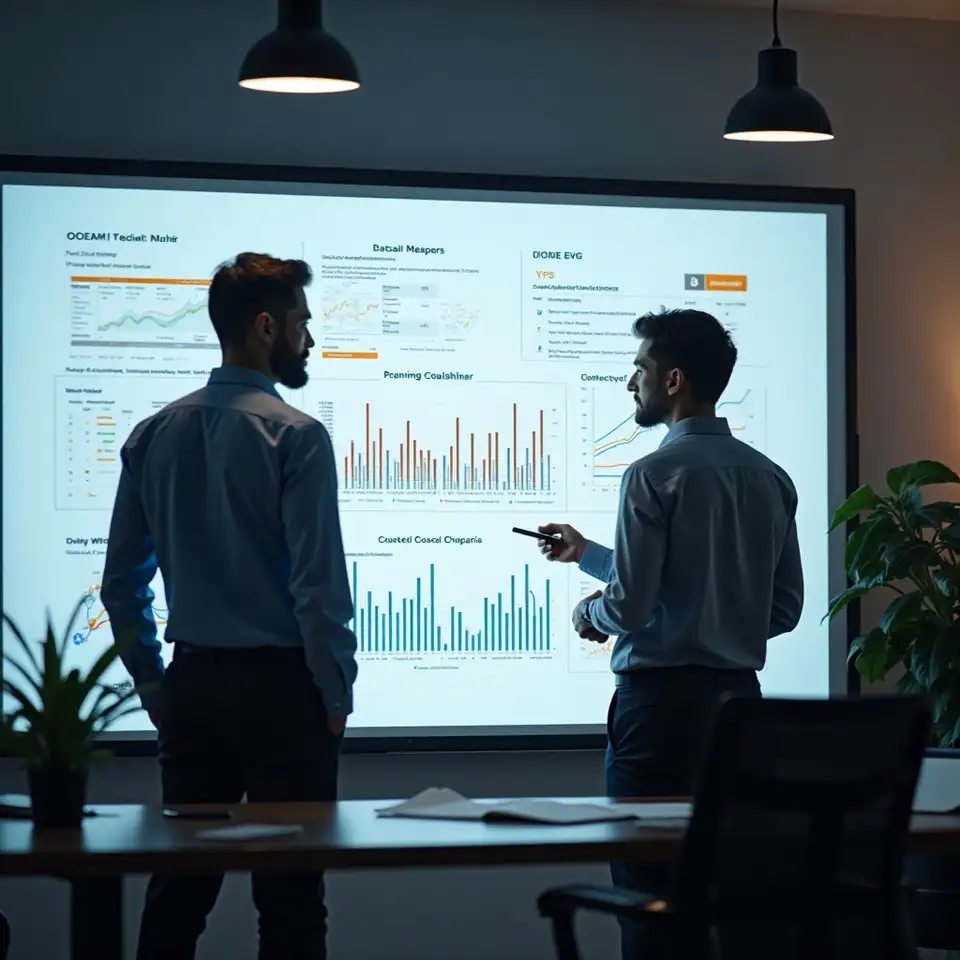
Mapping your financial data flows together
During Discovery Mapping workshops, our team and yours sketch out how financial datasets
currently move through your organization. We capture sources, formats, update rhythms,
and manual fixes, then translate that shared picture into practical requirements for
AI-supported harmonization that respects existing workflows and governance.

Reviewing harmonized outputs in context
In review sessions, data engineers and analysts sit side by side with harmonized dashboards. They examine where sources agree, where they diverge, and how conflicts were resolved. Annotations and logs provide context, helping both groups refine rules and ensure the AI pipeline reflects the realities of day-to-day research work.

Aligning AI harmonization with governance
Governance and risk specialists join discussions to align harmonization practices with internal policies and Canadian privacy expectations. Together we review documentation, access controls, and audit trails so that AI-assisted financial data pipelines support accountability, rather than introducing opaque steps into critical research processes.

At-a-glance overview
What we do, how we think about AI, and where we draw the line between tooling and advice
At Neravilo, our role is to help research teams turn fragmented financial market data into a more coherent, traceable base for analysis. First, we map how data currently moves through your organization, from external feeds and internal systems into reports and dashboards. Next, we design AI-assisted harmonization flows that align formats, reconcile identifiers, and flag anomalies without hiding uncertainty. Finally, we document each step so analysts, risk specialists, and leadership can understand how a given number was constructed before relying on it in decisions. We work with Canadian privacy expectations in mind and always emphasize that harmonized data should support, not replace, critical thinking. Results may vary, and past performance does not guarantee future results, so we encourage periodic reviews of both the pipelines and the interpretations built on top of them.
Talk with usKey points about using our information and tools
This page gathers practical information about how we approach AI financial data harmonization, what you can reasonably expect from our work, and which responsibilities remain firmly with you and your organization.
Role of our AI systems
We design our harmonization flows to keep analysts in the loop. Each transformation step is logged, and we encourage teams to review sample records regularly. Harmonized outputs are meant to support market research, not to act as automated decisions or individualized recommendations.
Privacy and governance focus
We handle data with Canadian privacy expectations in mind, paying attention to purpose, retention, and access controls. While we do not provide legal advice, we aim to work in ways that support your compliance teams rather than surprise them, especially where financial datasets intersect with other sensitive information.
How to interpret examples
Examples, scenarios, and narratives on this site describe how harmonization can reduce friction and surface discrepancies, but they are not promises of specific outcomes. Results may vary based on data quality, internal processes, and regulatory constraints, and past performance does not guarantee future results.
What we do not provide
We do not provide personal financial planning, structured training, or individualized advisory services through this site. Our focus is on infrastructure and methods that help organizations manage heterogeneous financial datasets more thoughtfully, leaving detailed advice to qualified professionals who know your specific situation.